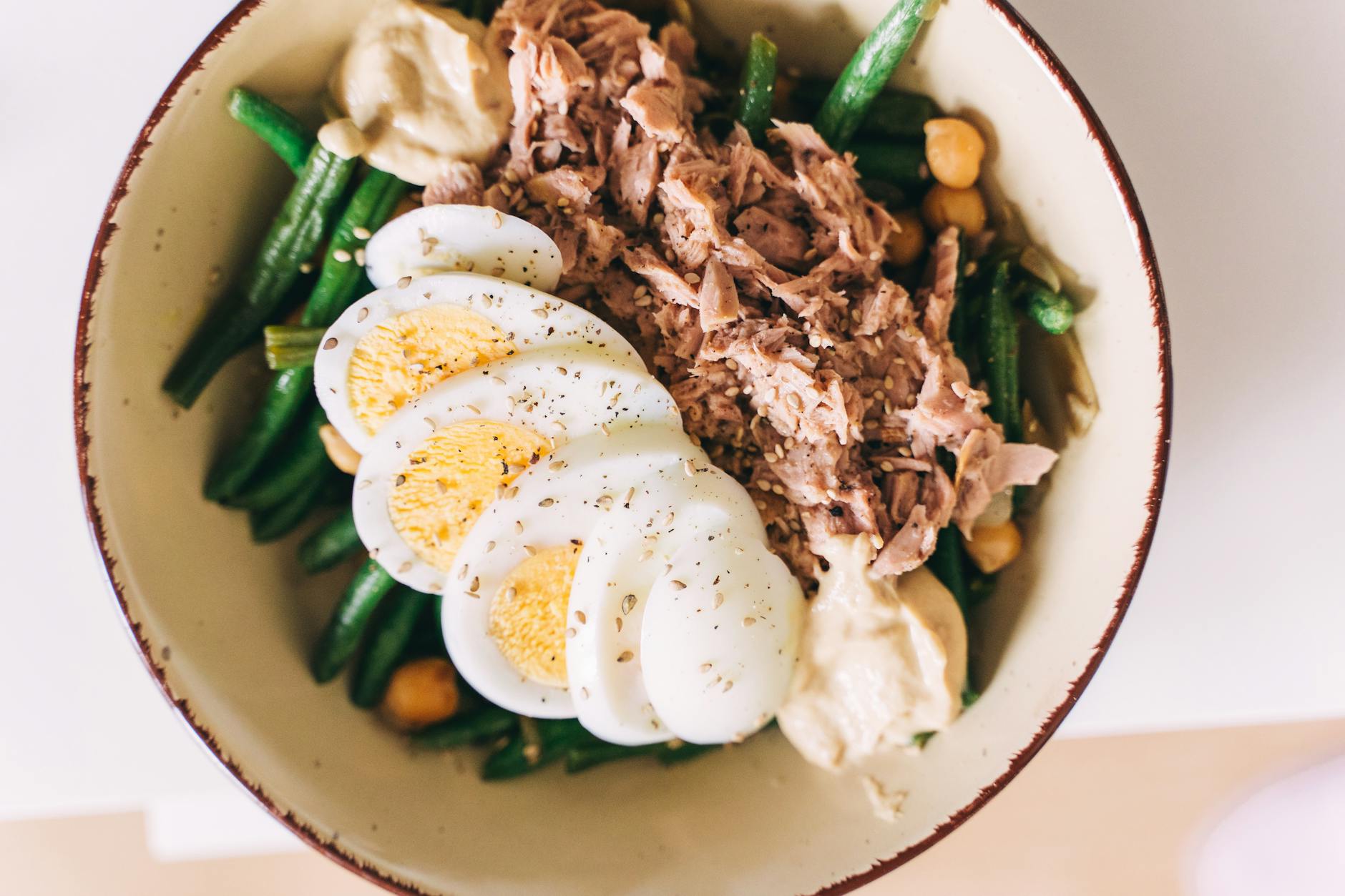
The Recommended Dietary Allowance (RDA) for protein is 0.8 grams per kilogram of body weight per day for adults, which is roughly 0.36 grams per pound. For a 154-pound (70 kg) person, that is about 56 grams. It is the amount that meets the needs of nearly all healthy adults, so think of it as a floor. Newer US guidance and sports nutrition groups point to higher intakes for many people, especially older adults and people who train.
The numbers online vary because the answer depends on age, activity, goals and overall calorie intake. This guide gives the standard figures, the higher ranges used elsewhere, and a practical way to check where you land using ordinary food.
The baseline: what the standard recommendation means
The RDA for adults is 0.8 g of protein per kg of body weight per day, set by the Institute of Medicine (now the National Academy of Medicine). It was designed to prevent deficiency, not to maximize muscle or health. The Acceptable Macronutrient Distribution Range (AMDR) is a second reference point: protein can make up 10 to 35 percent of daily calories. Protein provides 4 calories per gram.
The 2025 to 2030 Dietary Guidelines for Americans, released in early 2026, advise a higher intake of about 1.2 to 1.6 grams per kilogram a day, according to a summary in a family physician journal. The two numbers answer different questions: 0.8 g/kg is the minimum to avoid deficiency, and the higher range reflects current thinking about muscle maintenance and ageing. Pregnancy, breastfeeding, growth in children and teens, illness and kidney disease change the picture, and a clinician can give a figure for those situations.
Here is what 0.8 g/kg looks like at different body weights, next to a range of 1.2 to 1.6 g/kg:
| Body weight | At 0.8 g/kg (RDA) | At 1.2 to 1.6 g/kg |
|---|---|---|
| 110 lb (50 kg) | about 40 g | about 60 to 80 g |
| 154 lb (70 kg) | about 56 g | about 84 to 112 g |
| 198 lb (90 kg) | about 72 g | about 108 to 144 g |
| 242 lb (110 kg) | about 88 g | about 132 to 176 g |
Why one number does not fit everyone
Several things push needs above the baseline.
- Age. Muscle becomes less responsive to protein with age. Expert groups focused on older adults commonly suggest roughly 1.0 to 1.2 g/kg per day, and sometimes more during illness or recovery.
- Resistance training. The International Society of Sports Nutrition position stand gives about 1.4 to 2.0 g/kg per day for people who train for strength or muscle.
- Endurance training. Joint sports nutrition position statements give a range of about 1.2 to 2.0 g/kg for athletes in general, with the lower end common for endurance work.
- Eating less than you burn. When you diet to lose weight, intakes toward the higher part of these ranges help you hold on to muscle.
- Mostly plant-based eating. Plant proteins are somewhat less digestible and lower in some amino acids, so people eating mainly plants may do better aiming for the upper part of their range.
A sedentary 35-year-old and a 68-year-old who lifts three times a week are asking different questions, and the second usually benefits from a higher number.
Protein and fullness
Protein is generally considered the most satiating macronutrient per calorie, and meals with a solid protein source tend to hold off hunger longer than meals built mostly from refined carbohydrates. That is one reason moderately higher protein intakes are common in weight-management plans. It is not a magic effect, since protein-rich foods like cheese or sausage can still be easy to overeat. If you are hungry two hours after a breakfast of toast or cereal, adding eggs, Greek yogurt or cottage cheese is a simple experiment.
How much per meal, and does timing matter?
Your body can use protein from any meal, but muscle protein synthesis responds best to a moderate dose in one sitting. Sports nutrition guidance commonly gives about 0.25 to 0.4 g/kg per meal, or roughly 20 to 40 grams for most adults. Spreading intake over three or four meals suits many people, since breakfast is often very low in protein and dinner very high.
The “anabolic window” right after a workout is wider than often claimed. A normal meal within a few hours before or after training is fine, and total daily protein matters more than the clock.
What the numbers look like in real food
Approximate values, consistent with USDA food composition data (brands and cuts vary):
| Food | Typical portion | Protein |
|---|---|---|
| Chicken breast, cooked | 3 oz (85 g) | about 26 g |
| Canned tuna | 1 can, drained | about 25 to 30 g |
| Greek yogurt, plain | 3/4 cup (170 g) | about 15 to 17 g |
| Cottage cheese | 1/2 cup | about 12 to 14 g |
| Eggs | 1 large | about 6 g |
| Lentils, cooked | 1 cup | about 18 g |
| Firm tofu | 1/2 cup | about 10 to 20 g, depending on type |
| Milk | 1 cup | about 8 g |
| Peanut butter | 2 tablespoons | about 7 g |
A sample day near 100 grams: two eggs and a cup of Greek yogurt at breakfast (about 30 g), a tuna sandwich at lunch (about 30 g), a handful of almonds and a glass of milk as a snack (about 12 g), and a palm-sized portion of chicken or a cup of lentils at dinner (about 20 to 26 g). Eggs, canned beans, canned fish and dried lentils are among the least expensive protein sources, though prices change.
Do protein powders and supplements help?
Whey, casein, pea and soy powders are convenient, not necessary. They make sense when you struggle to reach your target with food, when appetite is poor, or when you want something portable after training. If food gets you there, powders add little.
A few cautions apply. Dietary supplements are not approved by the FDA before sale, so quality varies, and a seal from an independent testing organization is one way to reduce the risk. Check labels for added sugars and other ingredients. A shake also replaces foods that bring fiber and micronutrients, which are covered in the guide on what fiber actually does.
Is too much protein harmful?
For healthy adults, intakes up to about 2 g/kg per day are generally considered safe by sports nutrition bodies, and some studies have used higher amounts without clear harm. The claim that high protein damages healthy kidneys is not supported by good evidence in people with normal kidney function.
The picture is different with kidney disease. People with chronic kidney disease are often told to limit protein, and the right amount depends on the stage. If you have kidney disease, liver disease or a metabolic disorder, ask your clinician or a registered dietitian before raising your intake.
Very high protein diets can also crowd out vegetables, fruit and whole grains. A pattern like the one in the Mediterranean diet for beginners shows how to get plenty of protein from fish, legumes and dairy while keeping plant foods in the mix.
When to see a doctor or dietitian
Talk to a clinician if you have known kidney or liver disease, are pregnant or breastfeeding, or manage diabetes with medicine. Also get advice if you are an older adult losing weight without trying, or if you notice any of these:
- Unintentional weight loss or loss of muscle strength
- Swelling in the legs, feet or around the eyes
- Foamy urine that persists
- Extreme fatigue that does not improve
Seek urgent care for sudden severe swelling, confusion, shortness of breath or very little urine output.
Checking your own intake
- Multiply your weight in kg by 0.8 for the RDA, and by 1.2 to 1.6 for the range in current US guidance. Older adults and people who train may want to talk to a dietitian about where in that range to aim.
- Divide by three or four meals to get a per-meal target.
- Anchor each meal with one clear protein source.
- Track for three days with a free app or a notebook. Many people find they are short at one meal, often breakfast.
- Adjust, then stop tracking. The goal is a habit, not a lifelong spreadsheet. If you are planning meals around training, the guide on what to eat before a workout covers how protein fits in around exercise.
To add up a day against a target you set, use the protein, fiber and fluid tally and food label percent Daily Value helper.
Where this comes from
This article draws on the Dietary Reference Intakes for protein from the National Academy of Medicine (formerly the Institute of Medicine), the 2025 to 2030 Dietary Guidelines for Americans as summarized in an American Academy of Family Physicians journal article, and the International Society of Sports Nutrition position stand on protein and exercise. Food values are approximate and based on USDA food composition data. Guidelines are revised periodically, so check the current figure at the source. This is general information, not medical advice.